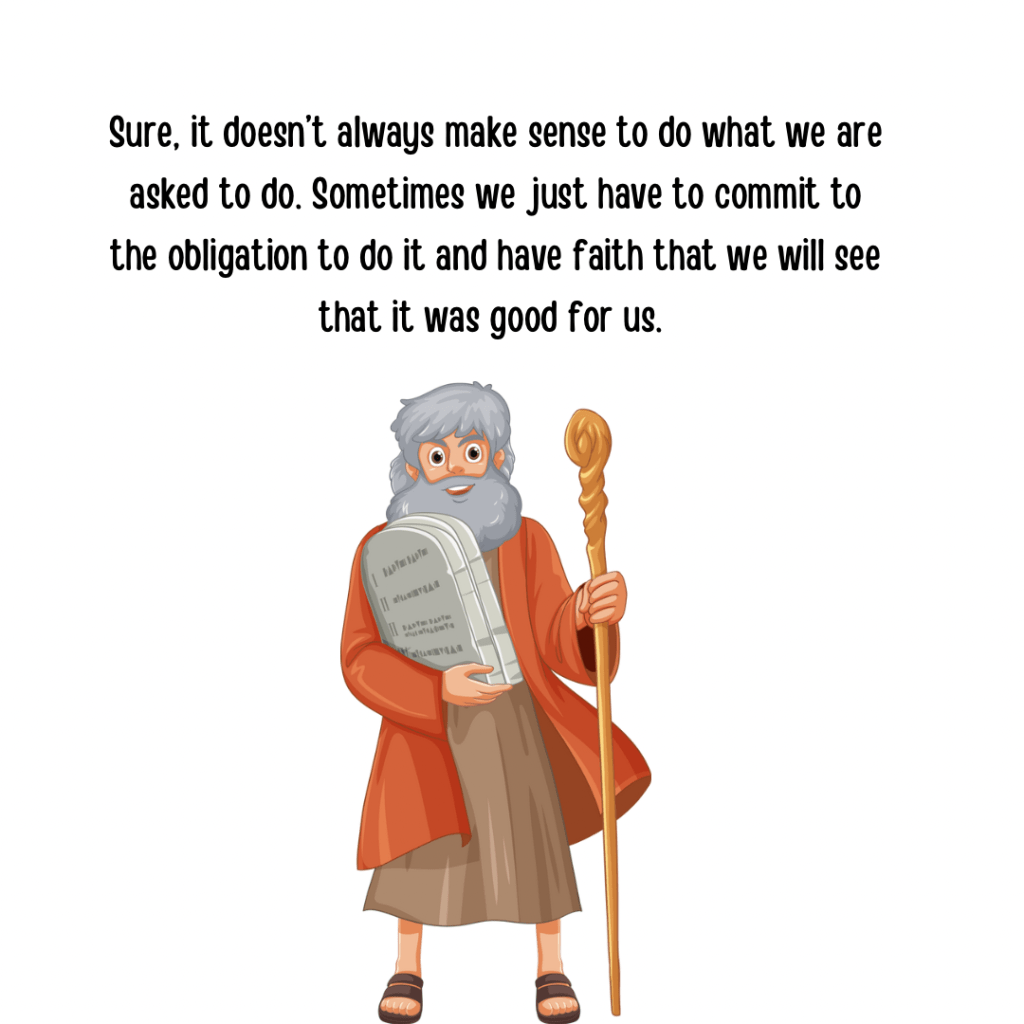
In Parsha Eikev, Moishe told the children of Israel that if they fulfilled the mitzvot (commandments), they would prosper in the land G-d promised their forefathers. He describes the land as one flowing with milk and honey, meaning it was a blessed land that would provide them with the food and prosperity they needed to be happy and content. But he also said that their forty years in the dessert was to teach them that “man cannot live by bread alone, but the utterance of G-d’s mouth.”
The physical and emotional environment in which we are placed will determine how we grow as individuals, but one area of our life often neglected is the G-d factor; our spiritual life.
G-d asking us to fulfill the mitzvot (commandment) is like having rules in a relationship. In being clear about what is expected in that relationship, we are also making it clear that if the relationship becomes one-sided, there may be consequences. As Hashem makes it clear that they will prosper in the land if they fulfill the mitzvot.
Moishe also scolds them for the many times they complained and rebelled against Hashem. But he also reminds them of Hashem’s love, and because of that love, He forgives them.
We can never expect smooth waters in our relationships. There will be some stormy times, and relationships may end with no possibility of rebuilding. But Hashem’s love for us is unwavering. When we choose to rebel or ignore him, or we forget to be grateful for his kindness and compassion, he still waits for us to come back to him. Sometimes I think He has an anxious personality type of the ever forgiving, always hopeful person.
Of all of this Parsha, what caught my attention most was the second chapter of the Shema, which repeats how important it is to pay attention to the rewards for fulfilling the mitzvot and the effects of not fulfilling them. And it is only in fulfilling them that we are promised the coming of the Messiah.
But I want to tie in something else that this Parsha talks about – the convert who chooses to leave the pleasures of the world, which is also free of fulfilling 613 commandants, to follow Hashem. It is a commitment, no doubt. But to choose to follow and be committed to something takes a little more than passion and love – two things that can be fleeting. It takes belief, faith, and knowing that this is what we are meant to do. The convert who chooses to follow Hashem without any other agenda but to get closer to Hashem decides on that, knowing that this is what they are meant to do. The story is that a convert receives a double portion in the world to come for choosing the Jewish life. Perhaps because we all can appreciate the value of someone when they choose to love, commit and accept us for who we are with just faith.
Is it any wonder that is perhaps why it was necessary to reiterate how important it is to fulfill the mitzvot? By abiding by any relationship rules and expectations, we prosper emotionally. How much greater would our fulfillment be by fulfilling Hashem’sHashem’s laws, not just for our spiritual growth but also for our emotional and physical needs?
What calm, peace, and clarity are there in our everyday life when we are reminded of what we have by saying a blessing before and after a meal when we see a rainbow or a friend we haven’t seen in 30 days? What a gift it is to have a grateful and content heart. And that is the pleasure of one mitzvah. How much more can we benefit from if we can fulfill all of them?
Now it begs to question – did Hashem want us to show our commitment to him by fulfilling the mitzvot, or is He just doing us a favor? Does He need us to validate Him? No. But it’s nice to be appreciated; when we are, we know who deserves the good things we have in store.
As always, I would love to have your thoughts as I am new to this world and always open to a new perspective.
Please share if you thought this was helpful.
Love, Shoshannah

 Shabbos Table
Leave a comment