Do you remember when someone made you a promise and couldn’t or didn’t keep it? Maybe you understood their reason. But it hurts when we can’t appreciate the breaking of a promise. That’s because we trust people will keep their words, and when they keep their promises, we feel safe with them.
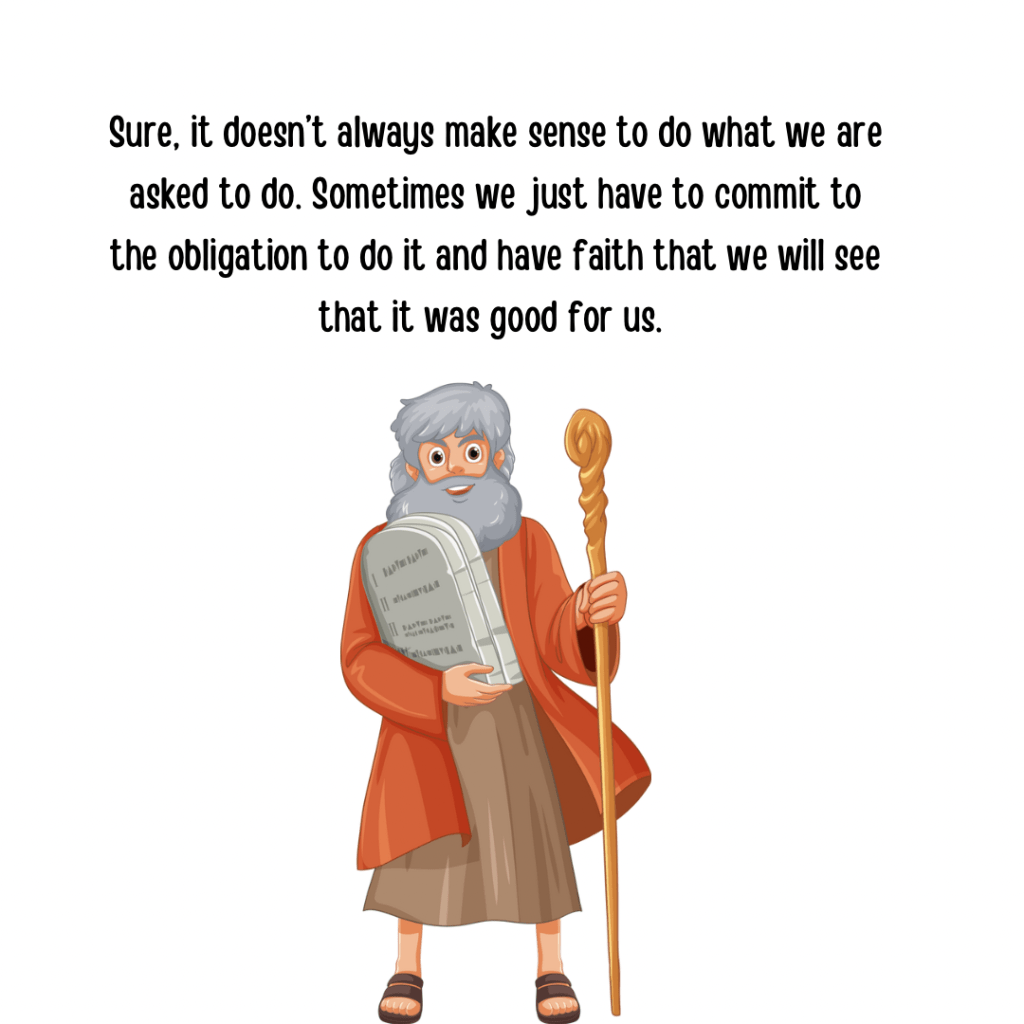
In Parsha Mattos, Moshe teaches the laws of Nedarim (promises).
Bali neder is what we say when we want to keep our word, but it provides for those times when we may have to break them.
Hashem had proven that He would protect the Jews as He took them out of Egypt, fed them the manna, and kept them safe while they were in the wilderness.
Moishe spoke up, fought and pleaded in the best interest of the Jews.
It was through these promises, spoken or not, that G-d and Moishe gained the trust of the people.
We trust people who make promises and keep them. And yes, we can try to understand when they can’t but it makes us a little skeptical.
I find it very hard to break a promise, and the people around me know that. Sometimes I have to ask to be relieved of that promise because keeping it can lead to my peril.
Saying b’li neder doesn’t provide a loophole, and it’s not an easy way out because you must still do what you say you’ll do but just in case you can’t, you say this to protect yourself. Why? Because it is considered a sin if you say you’ll do something and don’t do it.
In my practice as a heartbreak coach, many people come to me with regrets for committing to relationships that turned sour. They feel tied to their promises, and sometimes, their abusive partners use that commitment to guilt them into staying longer in the relationship.
So, what happens if we regret making a promise, but the person we made it to won’t release us? We can go to a beit din and ask to be released. The beit din will ask if we knew what we now know, would we have made that promise. Then they will ask if we are sorry. Upon this, they will say, “mutar lach, mutar lach, mutar lach” – your order has been undone.
In the case of a hafaras nadarim, a girl of 12 years old is old enough to know that a broken promise is a sin. However, if she needs to break that promise, her father can release her from it by saying “mufar nach,” – your order is canceled.
A woman who does something to break a vow that can cause problems in their marriage, or something that can cause her pain, can be released from her husband at the same time he knows of it.
In the eyes of Hashem, breaking a promise is no light matter, and it is why on Erev Rosh Hashanah, we gather in fours and ask for forgiveness for breaking any promise we might have made before Hashem judges us.
Keeping promises builds trust and trust is such a fragile thing. It is difficult to trust anyone who promises to do something and neglects to do it. We may be a little skeptical the next time they break a promise and by the third time, we don’t even bother to listen to them. And a relationship where we don’t trust a person to keep their word isn’t a healthy one.
Imagine if we couldn’t trust Hashem to be there in our times of need, like he promised. Would we choose Him?

 Shabbos Table
Leave a comment