This Prasha talks about several events but seems to keep the theme of death. The Parsha begins with how the ashes of the Parah Adumah are prepared, and this is important because it is to purify what is not pure.
Parah Adumah is a red cow that was slaughtered, its blood caught by a Kohen (high priest) and sprinkled seven times in the direction of the entrance to the Mikdash.
The Parah Adumah was left to burn until only ashes remained. The aches would then be mixed into the water from a spring and sprinkled three times on a person who was tamei meis (unclean).
What had the wheels of my head turning was that if a tahor (clean) person touched the water with the ashes, they would become tamei (unclean).
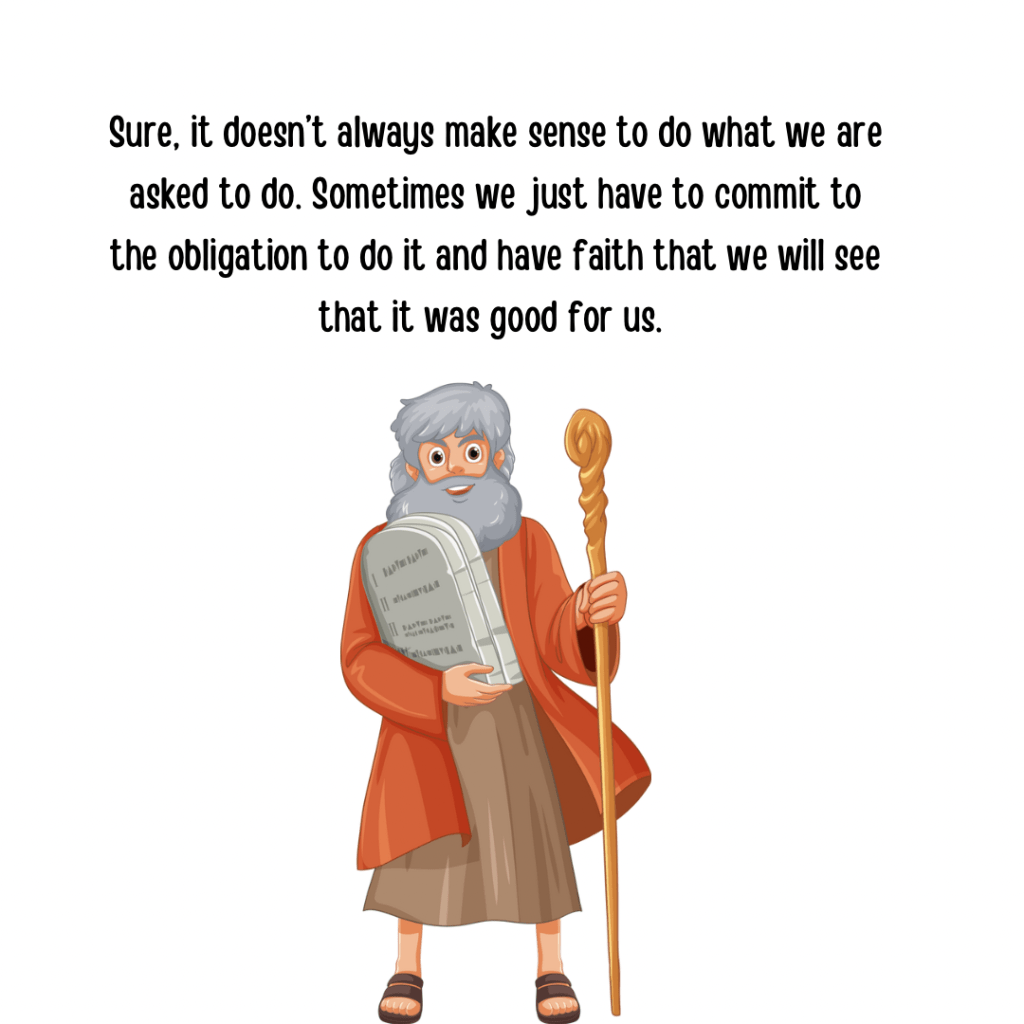
It shouldn’t make logical sense but may make emotional sense.
Hashem said to do it even if it doesn’t make sense. This provokes me to conclude that Hashem knew it might not make logical sense.
What we do know is that this is Hashem’s rule and law. This would mean the concoction of spring water and ashes is His property. It’s also His red cow and something he might consider a precious asset or gift as He’s only doled out nine to humanity in all of history. The next red cow will be a sign of Mashiach coming. So, it’s fair to say Hashem treasures this or these red cows.
Can a person become tahor (unclean) for touching what is not theirs and what is not meant for them?
Is the absence of permission for handling this precious product the reason one becomes tahor?
The Parsha jumps forward thirty-eight years after Korach’s rebellion. That would take the history of the people in the desert to forty years, as Korach’s rebellion happened two years after the Jews left Egypt. By now, all who were supposed to die, as Hashem said after the sin of the spies, would have died.
Now it’s time for Miriam to go. Miriam was the lead in bringing musical instruments as they rushed out of Egypt. She rallied the women into praising and glorifying Hashem with songs and music, and she prevented the women from sinning at the golden calf. Hashem loved her for her devotion. So, when she died, Hashem came down Himself for her instead of sending the angel of death.
The water from the rock, which provided water for every man and animal, stopped running when Miriam died. The water flowed because of Miriam’s devotion and faithfulness to Hashem.
We tend to become reliant on those most faithful to us, and it’s usually the one we trust to rally, support, and, in some cases, plead our case when we can’t do it adequately. Miriam’s faith in Hashem influenced the way the Jews worshipped Hashem. The Jews seemed angry a lot at Aaron and Moshe, but when Miriam was punished for speaking Lashon Hara, everyone grieved for and with her.
A little while after Miriam’s death, the people start complaining again. They needed water, and again, they accuse Moshe of bringing them to the desert to kill them. Moshe is now very angry at them. I mean, he’s got to be at his wit’s end by now. But that’s not what we expect of our leaders.
Still, Hashem swoops in and tells Moshe to speak to the rock, but the rock (the rock from 40 years ago which gave the Jews water, is no longer standing alone. It’s snuggled up with other rocks.
How is Moshe to know which rock? He and Aaron speak to a rock, and nothing happens. Moshe thinks that maybe he needs to hit the rock like he did the last time, even though Hashem tells him to speak to the rock. Moshe gives it a whack, and nothing happens. He finds another rock and hits it. Some water trickles out, but not much so, he whacks it a little harder. Water gushes out.
Now, Hashem is mad at Moshe for not speaking to the rock as He asked (told) him to do. Is Hashem upset at the disobedience? Perhaps. But I believe he’s also hurt that Moshe didn’t trust Hashem to make water flow from any rock. After all, Moshe should know Hashem better than anyone. Imagine how you would feel if your partner doubted your abilities or didn’t have faith in you to do something. They should know you’re quite capable.
Moshe perhaps also whack the rock out of the frustration he felt. He was angry with the Jews. And now Hashem is disappointed, probably because Moishe is showing the people that he’s losing his cool. He’s losing control, and that’s no way to be a leader. If our partner is weak, what does that tell people of our judgment? Moshe is Hashem’s partner in getting the people to Israel.
So, G-d says, you know what, I can’t let you in the promised land, man. These people need to be led there by a strong leader like Joshua, and I let this side, dude. If I do, they won’t have faith in me. They’ll say I’m weak, no matter how many miracles I show them. No, G-d doesn’t say that. It’s what I imagine him saying.
However, he tells Moshe that he will not enter the promised land. But he loves Moshe, so, after Moshe begs and begs, nags a few times, and probably pouts, G-d promises that he will see the promises land before he dies. And he sees the promised land from a mountain top.
Another part of this Parsha note mentioning is the bit where everyone gets angry at Hashem and Moshe, and they complain about the manna because they grow tired of living and traveling in the wilderness.
G-d gets angry and sends snakes to bite them. They realize their mistake quickly and beg Moshe to save them, and Moshe does without a complaint or bicker. Hashem tells Moshe to put a bronze snake on his stick, and when the bitten people look at the snake, they will be healed. No, there is no witchcraft there. It’s a symbol first remembering what they did and asking for forgiveness.
The following few Pasukim talk about the many battles the Jews fought before they could enter the land of Israel. They won every battle with the help of Hashem, but it wasn’t a leisure walk in the park as I suspect it might have been if they were more reliant on Hashem instead of the many doubts and trials they put Him through.
Throughout Parsha Chukas, we see that a relationship with Hashem is essential for a strong spiritual life, a life of peace and abundance. When we try to carve our path, we end up on painful and sometimes deadly roads. However, if we fall off the derekh (Yiddish-path), we can always return to Hashem by tshuva (repentance).
Partnering with Him and trusting that He knows what’s best for us is the only way to get closer to Him.
And like I’ve always said, won’t it be much better to partner up faithfully with the most powerful being – if I may be so bold to say “being.”

 Shabbos Table
Leave a comment